1/114 Merrindale Dr
Croydon South, VIC 3136
(03) 8799 2974

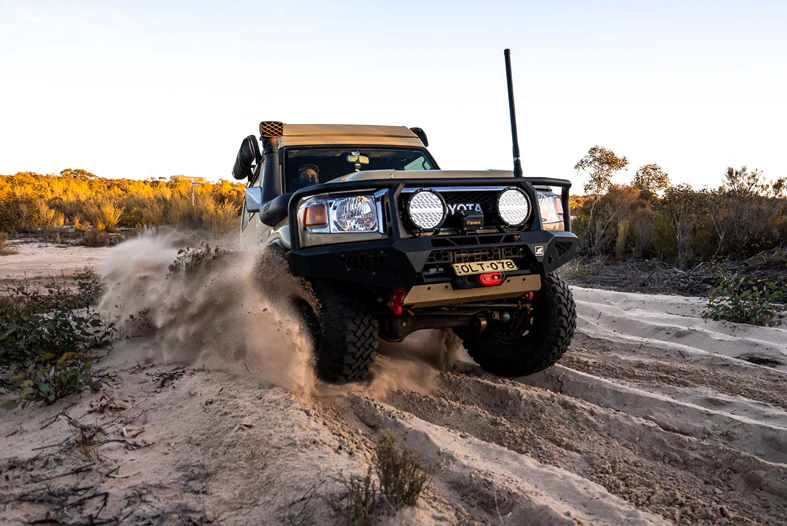
For many 4WD owners, sand driving can feel intimidating.
You might hear people talk about 'momentum' or 'just keep your foot in it,' but that advice can create more problems than it solves — especially if you're new to driving on beaches or dunes.
The truth is, successful sand driving starts before you even move. It starts with tyre pressure.
On the road, your tyres are typically inflated to around 32–40 PSI. That keeps the vehicle stable, improves fuel economy, and reduces wear.
In soft sand, those same pressures work against you. At highway pressures, tyres are firm and hold their shape. That means the vehicle's weight is concentrated into a smaller area. In sand, this causes the tyre to sink and dig.
Lowering your tyre pressure spreads the vehicle's weight over a larger surface area. Instead of digging down into the sand, the vehicle is better able to float over it.
That's the key difference.
You may hear experienced drivers talk about momentum, but momentum should be a backup tool — not the main strategy. Correct sand driving tyre pressure allows you to:
When tyres are overinflated in sand, the vehicle has to work much harder. That increases heat, drivetrain stress, and the likelihood of getting stuck. Lowering tyre pressure makes the job easier for both the driver and the vehicle.
There isn't one perfect number for every vehicle. It depends on:
As a starting point for most touring 4WDs:
If you're unsure, start at around 18–20 PSI and adjust lower only if the vehicle is still struggling.
Lower pressures improve flotation, but they also increase sidewall flex. That means you should:
Slow and steady is far more effective in sand than aggressive driving.
Many sand recoveries happen not because the vehicle isn't capable, but because the tyre pressure wasn't adjusted properly. High pressures in soft sand can lead to:
Lowering tyre pressure reduces strain across the entire vehicle. It's one of the simplest ways to protect your investment while improving capability.
If lowering tyre pressure is the most important step, accuracy matters. Trying to estimate pressure or releasing air without checking can lead to uneven handling or incorrect setup. A purpose-built tyre deflator allows you to:
The Saber Tyre Deflator is designed to make airing down simple and controlled — especially for drivers who want confidence and consistency before entering soft sand. The goal isn't speed for the sake of it. It's preparation done properly.
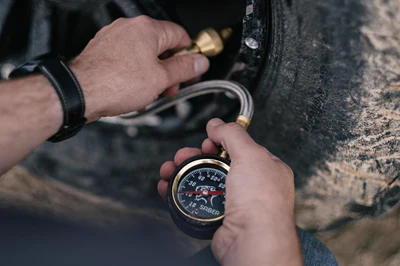
When you reach the beach entry or dune access track:
If the vehicle feels like it's working too hard, stop and lower pressures slightly further rather than adding more throttle. Tyre pressure is always the first adjustment to make.